Showing posts with label Ouabache. Show all posts

Sunday, February 24, 2019

Hawk: Skirmish on the Ouabache

A piece of short historical fiction, published in "The Tomahawk & Long Rifle" (Vol 44, No 1),
the official publication of the American Mountain Men.


***


My father was captain of the militia and men was saddling up. In the dark I could hear horses snorting and the jangle of bridles. Mother lit a oil lamp as my father pulled on his boots and had words with his corporal.

The Piankeshaw had attacked again, this time at Hardin’s cabin. The corporal lowered his voice so my mother might not hear the worst of it.

“They peeled his top knot, cap’n. Set the roof afire and took the missus captive.”


Saturday, September 17, 2016

The Grouseland Rifle: A Longrifle by John Small

Appearing in the November 2016 issue of the National Rifle Association magazine American Rifleman:

"In its own odyssey, an historic American long-rifle from the bench of Revolutionary War gunsmith John Small (1759-1821), long separated from the town where it was built, would be delivered to its home by modern-day versions of those
Greek mariners. As Odysseus was returned home to Ithaca, so was John Small, in a way, carried home to Vincennes, Ind. 

"This long gun, built by Indiana’s first sheriff John Small around 1803, would become known in 2004 as the “Grouseland Rifle” when it returned to Vincennes to reside in the museum at Gov. William Henry Harrison’s Grouseland home. In 2012 when the Grouseland Rifle was adopted as the official rifle of the State of Indiana, it would come to symbolize an entire state’s regard for its frontier heritage."

Story continues on AmericanRifleman.org.  

John Small's Grouseland Rifle: An Official State Rifle and its Reproduction

In Muzzleloader magazine (September/October 2016):

"INDIANA GUN MAKER MARVIN KEMPER laid John Small’s 200-year-old long rifle on the dining room table in William Henry Harrison’s Grouseland home in Vincennes. It was summer of 2015, and Kemper looked out the windows to sunlight mottling the leaves in a stand of walnut trees.

"Governor Harrison had met Shawnee chief Tecumseh among those trees in 1810, and listened to Tecumseh’s protests over acquisition of tribal lands by the Americans. Colonel John Small had been adjutant general to Harrison’s territorial militia from 1801 to 1812, and would have dined at the table in this room, eating roasted prairie chicken and discussing military operations with the governor.

Meriwether Lewis and William Clark passed through here, Kemper reflected, and were guests at Harrison’s table.

"History transpired in this place. Small, Harrison, Tecumseh, and Lewis and Clark might have all been looking over Marvin Kemper’s shoulder as he began his process of bringing new life to John Small’s 'Grouseland Rifle' at this table."


Story continues in Muzzleloader magazine, available for order at Muzzleloader Magazine web site.


Sunday, July 17, 2016

The Grouseland Rifle: Tied to the Land


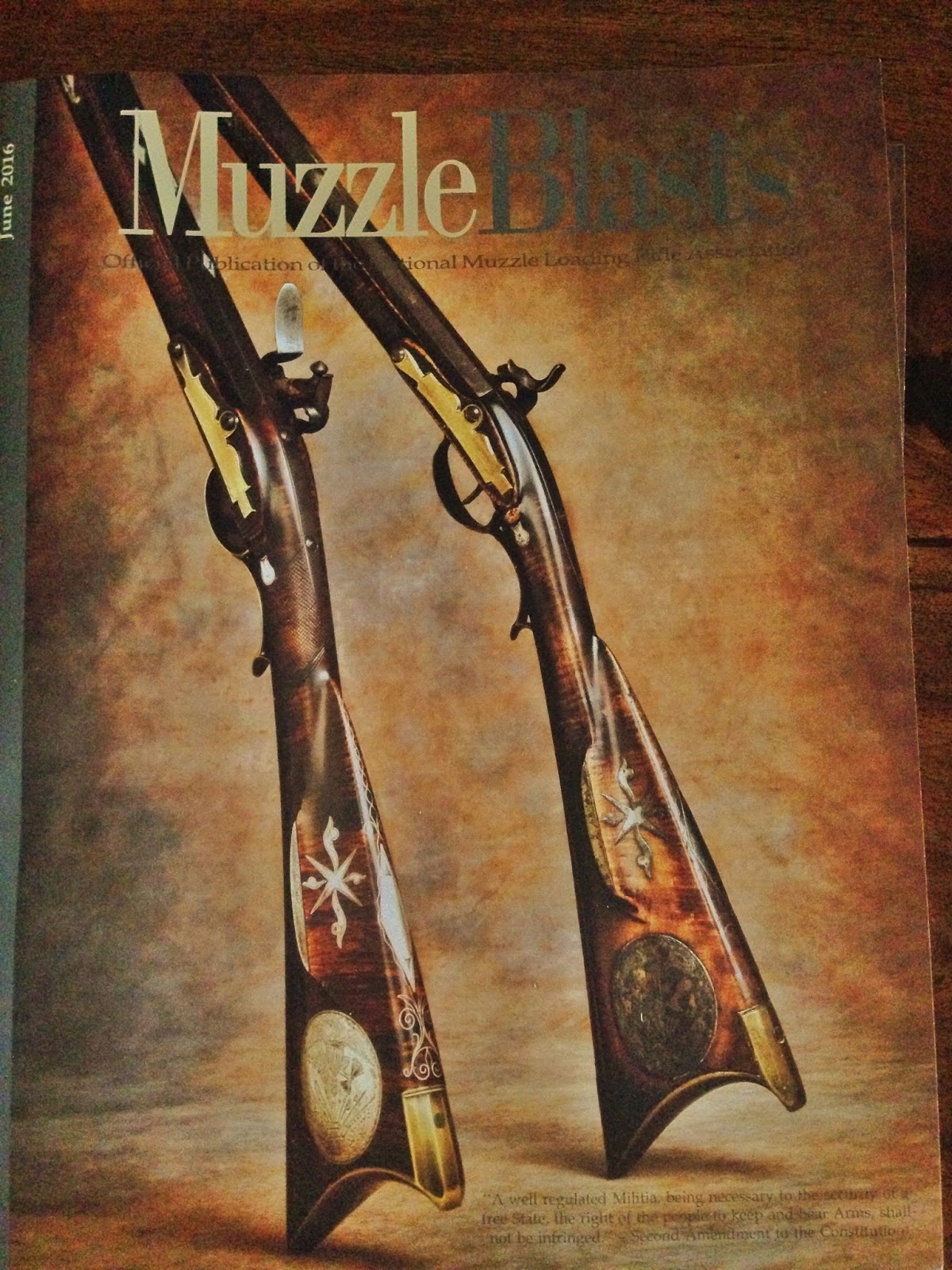
From the pages of Muzzle Blasts, the magazine of the National Muzzle Loading Rifle Association, a story I was privileged to tell:

"An historic American long rifle from the bench of an 18th-century gunsmith is seeing a rebirth in the heart of the Old Northwest Territory. The “Grouseland Rifle” was crafted in the early 1800s by Revolutionary War veteran and gunsmith John Small (1759-1821), and was designated the Official Rifle of the State of Indiana in 2012. 

"As part of Indiana’s 2016 bicentennial, the Grouseland Foundation commissioned a reproduction tied as deeply to the land and the history of the Old Northwest as is the original Grouseland Rifle and its maker, John Small of Vincennes. This faithful reproduction will be available at auction in August/September 2016."

The story continues in Muzzle Blasts:   Link to story on NMLRA.org

Monday, June 10, 2013

Hawk

My father was captain of the militia and men was saddling up. I could hear horses snorting in the dark and the jangle of bits and bridles. Mother lit a lamp as my father pulled on his boots and had words with his corporal.

The Piankeshaw had attacked again, this time at Hardin’s farm. The corporal lowered his voice so my mother might not hear the worst of it.

“They cut ‘im down, cap’n. Scalped him and set the cabin afire and took captive Missus Hardin.”

My father asked how many they were. Number of muskets. Their direction of travel. Whilst the corporal told what he knew, my father gathered up his kit, his long rifle, powder horn and shot, and his tomahawk.